Support and Resistance: The Levels That Run the S&P 500
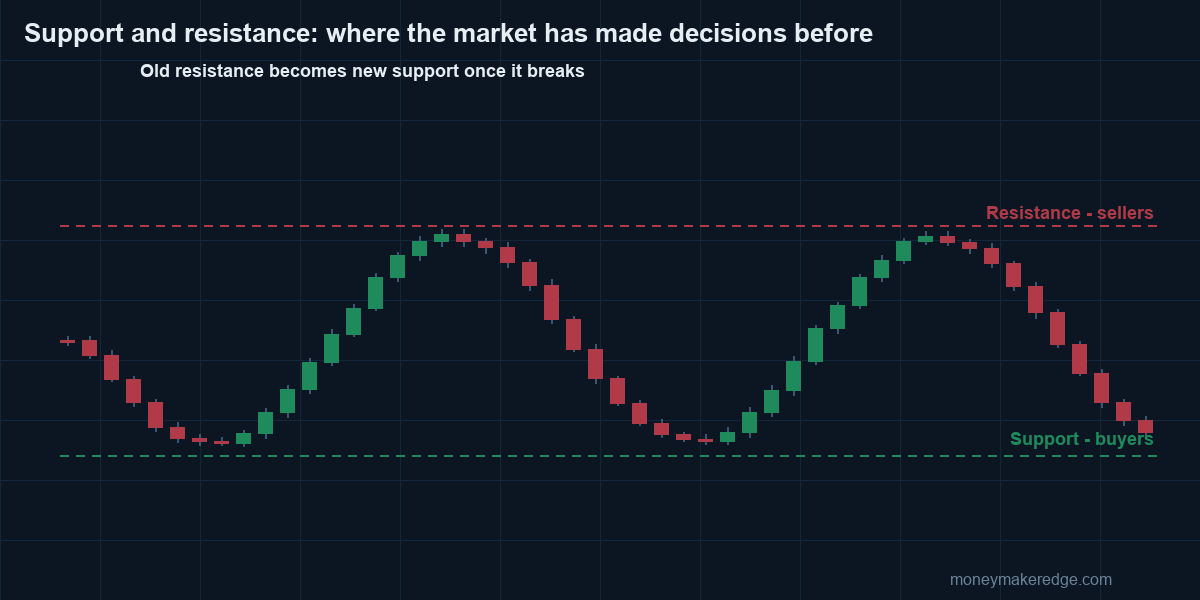
Every trade we take in the live trading room starts with a level. Support is a price where buyers have stepped in before; resistance is a price where sellers have. They work because the market remembers: traders who bought at support want to buy there again, traders who sold at resistance want to sell there again, and traders who were trapped want out at break-even. The levels are not magic – they are crowds.
Finding the levels that matter
- Swing highs and lows on the daily chart. The more times a level has turned price, the more traders are watching it.
- Prior closes and opens, especially yesterday’s high, low and close on the S&P 500 emini.
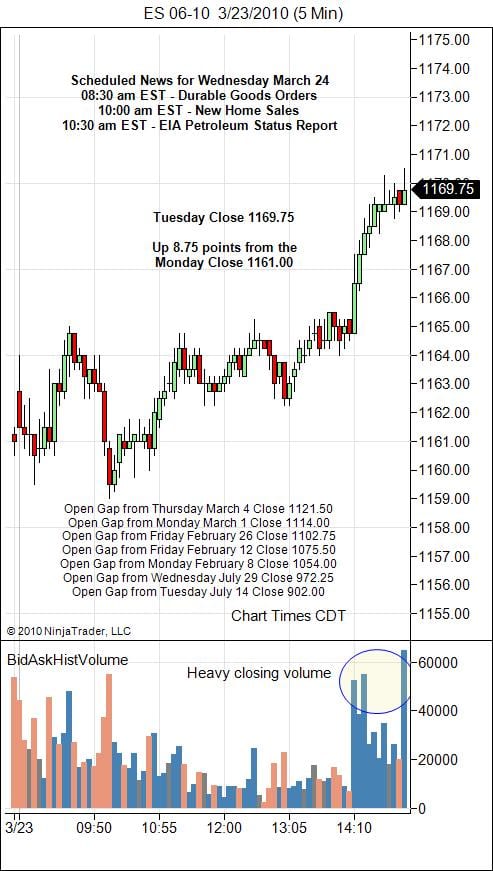
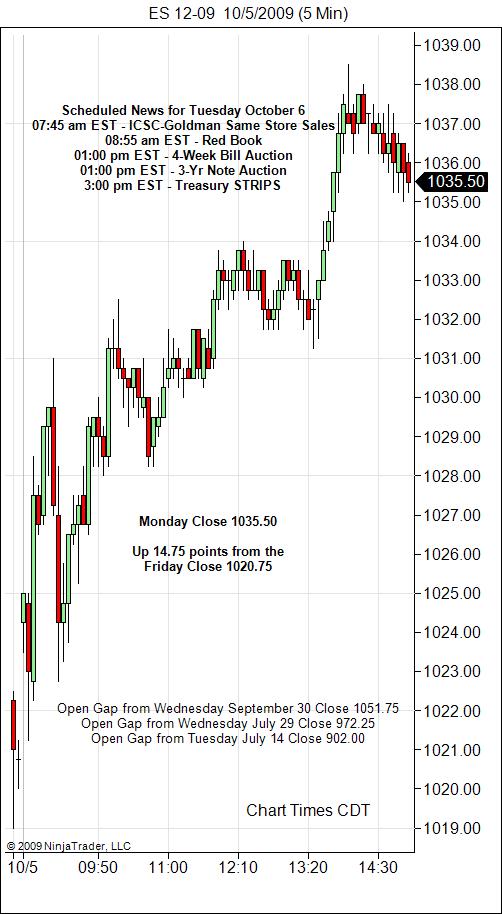
- Gap edges. Unfilled gaps are magnets and their edges act as support and resistance (see our note on open gaps).
- Round numbers on big indexes – they are where orders cluster.
The rule: old support becomes new resistance
When a support level breaks, the buyers who defended it are now losing money. On the first rally back to that level they sell to get out at break-even – which is why broken support turns into resistance, and broken resistance turns into support. This one rule explains most retests, and it gives us our favorite entry: the failed retest of a broken level, with the stop on the other side of it.
Trading a level, not a line
Support and resistance are zones, not exact prices. We never buy a level blind; we wait for the reaction – a bullish engulfing candle, a higher low on a lower timeframe, a failed breakdown. The reaction is the entry, the far side of the zone is the stop, and the next level is the target. Risk is defined before the click, every time.
When levels fail
A level that breaks on expanding volume and closes through is not a buying opportunity – it is information. The crowd that held it has lost, and the next level is now the target. Respecting a break is worth more than any individual trade.
Related: price channels and Fibonacci retracements, two ways to find the next level.
New to Money Maker Edge? Start here.
Everything on this blog comes from one method: defined risk, a written plan, and live trading with a group. Learn it in three days, then trade it every market day.
The 3-day day trading course · The live trading room · Day trading psychology · Call 866-640-3737